Votre commande est qualifié pour la livraison gratuite You are $50 away from free shipping.
Image de diapositive

Shop our Best Sellers:


Your Cart 0

Désolé, il semble que nous n'ayons pas assez de ce produit.

Paire avec
Votre commande est qualifié pour la livraison gratuite You are $50 away from free shipping.
Sous-total Gratuit
hors taxes et frais de livraison

Open Letter To All New Parents:

Child Development Specialist Reveals The Hidden 3-Step Montessori Method That Builds Independent Play Through Purposeful Learning

  • Reviewed by Dr. Marie Lambert, Child Development Specialist.

Last updated, Sept 2025

Dear families,

My name is Marie Lambert and I've been a Child Development Specialist for over 35 years. 


In that time, I’ve observed children from all backgrounds, temperaments, and abilities.


And despite every child being unique, there’s one factor I’ve found that makes the biggest difference in their confidence, curiosity, and growth:


Their ability to build independence through early play.

Now, please don’t dismiss independence as something that only matters once your child is of “school age.” It doesn’t work that way. In fact, studies have shown children as young as 18 months are already beginning to build the habits of self-direction—learning how to explore, make choices, and stay engaged without constant guidance. These early years are the foundation. If independence isn’t nurtured during this stage, children can become reliant on constant stimulation from parents or screens instead of developing the confidence to play on their own.

To put this into perspective, the early learning window between birth and age 6 is just 2,190 days…


…some even less before a child enters a classroom.


And if purposeful play isn’t introduced in those years, the foundation for self-direction, confidence, and curiosity can be shaky from the very start.


That means only the earliest months of exploration are fully harnessed—while the rest risk being filled with dependency, distraction, and constant need for outside stimulation.


It’s like teaching a child to ride a bike but never letting go of the handlebars.


At first, the ride seems smooth. But without the chance to balance on their own, the child never learns the confidence to pedal freely.


It doesn’t matter how strong or steady the bike is later…


If independence wasn’t supported early on…


…the child will always struggle to ride without help.

Struggles with independence during play are common—but NOT normal.

And the painful reality is that an overwhelming number of children today struggle to play without constant direction from adults—or the distraction of screens and noisy gadgets.


Unfortunately, most parents don’t realize what signs to look out for. So they either don’t act fast enough…


…or they don’t act at all until dependence has already become the norm at home.


It breaks my heart every time I hear a parent say, “I thought they’d just grow out of it.”


Because every parent assumes clinginess or constant need for attention is harmless…


…only to later realize those early habits were shaping their child’s confidence and independence all along.


I’ll cover HOW to guide play that truly builds independence in a moment…


However…

You MUST know what signs to look out for in your child.

These are:

  • Needing constant attention during play
  • Struggling to stay entertained without an adult or screen
  • Whining or losing interest quickly when left alone
  • Difficulty starting or continuing activities on their own
  • Rarely exploring without someone’s help
  • Reliance on screens as the only form of “independent play”

Just imagine if you were in their position. How discouraging would life feel if you wanted to explore—but always felt you needed someone else to keep you going?


Now, if your child is not showing any of these signs yet…


Does that mean you should wait until they do before you act?


Absolutely not!


Acting before you see the signs is critical. And if your child is currently curious and willing to explore, the best way to support them is to protect that natural independence—before overstimulation or constant reliance takes it away.


So now you know the early warning signs to watch for…


And you know the importance of acting fast…


…even if you see no signs at all.

The Montessori Secret: The 3-Period Lesson for Building Independence Through Play

Over 100 years ago, Dr. Maria Montessori discovered that children don’t learn independence by accident.


They build it through a simple but powerful 3-step process known as the 3-Period Lesson.


This process is the backbone of Montessori learning. It’s the difference between a child who constantly needs direction to stay busy… and a child who can confidently explore, discover, and play on their own.


Based on Montessori’s principles, here are the 3 stages every child needs to grow into independent, self-directed learners:

1. Naming (Introduction)

This is the very first step in the Montessori method—and it may also be the most overlooked when it comes to independence.


Because Naming is not just pointing at an object and saying a word.


It’s the moment when a child begins to connect language to the world around them—so they can recognize, choose, and explore without constant prompting from an adult.


It could be as simple as holding up a wooden block and saying, “This is red.”
Or placing a circle in their hand and naming it clearly, “This is a circle.”


However, don’t be fooled.


Naming isn’t about memorization.


It’s about giving children the tools to navigate play on their own—anchoring words to experiences they can touch, see, and recall later without your help.


Without this foundation, they remain dependent on others to guide them.


But with it, they take the first step toward confident, self-directed play.

2. Recognition

This is where a child moves beyond simply hearing—and starts to act on their own.


Because Recognition is the step where the brain connects the dots:


The child no longer just hears “blue”—they look, decide, and pick up the right block without needing your hand to guide them.


They no longer just glance at a triangle—they notice how it’s different from a circle and make the choice themselves.


However, don’t mistake this for mastery.


Recognition is fragile.


It requires practice to grow stronger—but not through rigid drills. It must be repetition with variation.


For example:

  • Showing a red block, then asking for “the red one” among other colors.
  • Presenting shapes in different contexts so the child learns to apply the idea independently, not just repeat it when prompted.

Each time a child makes the connection on their own, their confidence grows.


And with every variation, their independence becomes more deeply rooted—like a muscle that strengthens each time it’s used without support.


Without Recognition, children remain reliant on constant prompting. But with it, the bridge to true independence begins to form.

3. Recall

This is the final step—and the one that transforms guided play into true independence.


Because Recall proves that a child can bring an idea back from memory and act on it without being shown.


It’s the moment they hear “circle” and confidently find it on their own.


It’s when they’re asked “What color is this?” and they say “blue” without hesitation.


And here’s why Recall is so powerful:


Every time a child recalls, they’re not just strengthening memory—
They’re proving to themselves that they don’t need constant guidance. They can explore, respond, and complete tasks with confidence.


It’s the foundation of true independence.


However, without Recall, children remain dependent.


They may recognize something when prompted, but they can’t carry it forward alone.


With Recall, the concept sticks. The skill belongs to them.


And just like a muscle, the more they practice recall, the stronger their confidence, independence, and self-direction become.

Why Most Toys Fail This Test

Unfortunately, most toys today are designed like fast food—cheap, flashy, and instantly satisfying, but offering no real nourishment for independence.


With lights that flash and buttons that beep, they keep children busy for a moment… but only in a passive way. The toy does the work—while the child just presses buttons and waits to be entertained.


The result? Children bounce from toy to toy, craving the next “sugar rush” of stimulation, but never building the confidence to explore, decide, or play on their own.


And just like fast food leaves a child hungry soon after eating, these toys leave them restless and dependent—tossed in the toy bin and forgotten within weeks.


So when you combine that with the constant pull of screens and noisy plastic gadgets…


It’s no surprise so many parents feel frustrated when their child struggles to play alone for more than a few minutes.


If you are going to give your child toys…


And I strongly recommend you do…


They shouldn’t just be toys that entertain.


They should be tools that nurture confidence, encourage exploration, and foster independence—without overstimulation getting in the way.

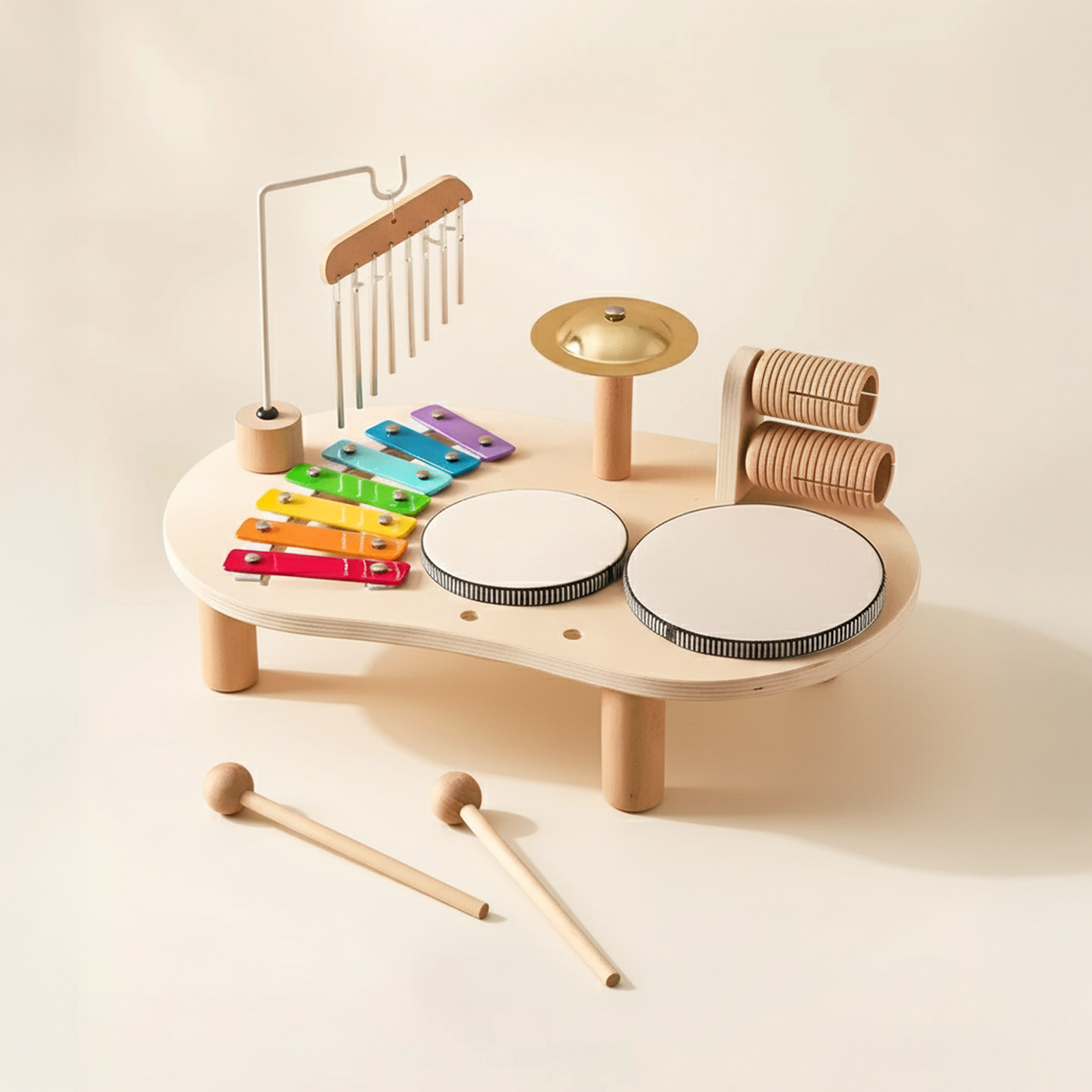
My #1 Choice is Toujours - Tiny Percussionist Music Set

Based on your quiz responses, it’s clear your child’s biggest opportunity right now is strengthening their ability to play independently.


I’ve seen countless toys marketed as “educational.”


But most of them are just bright lights, noisy buttons, and plastic distractions. They may keep children busy for a few minutes—but they don’t actually teach a child how to explore or engage on their own.


In fact, many of these toys do the opposite: they create dependency, encourage instant gratification, and leave children restless the moment the stimulation ends.


That’s why I recommend Montessori materials.


Unlike mass-market toys, Montessori playsets are calm, tactile, and designed with intention. They follow the proven 3-step learning process: Naming, Recognition, and Recall.


Each stage works in harmony, guiding a child from introduction… to understanding… to mastery—without needing constant direction or attention from parents.


And this is where the Tiny Percussionist Music Set stands apart.


This curated set was carefully chosen to support children who need help building confidence and self-direction. Every piece is simple, natural, and engaging enough to hold their interest—while versatile enough that they return to it again and again, discovering new ways to play without you by their side.


It’s this balance of simplicity and depth that makes it, in my professional opinion, the clear #1 choice for parents who want playtime to nurture independence—not dependency.


With the Tiny Percussionist Music Set, your child won’t just stay busy.


They’ll build confidence, problem-solving, and the ability to play on their own—skills that empower them in every part of life.
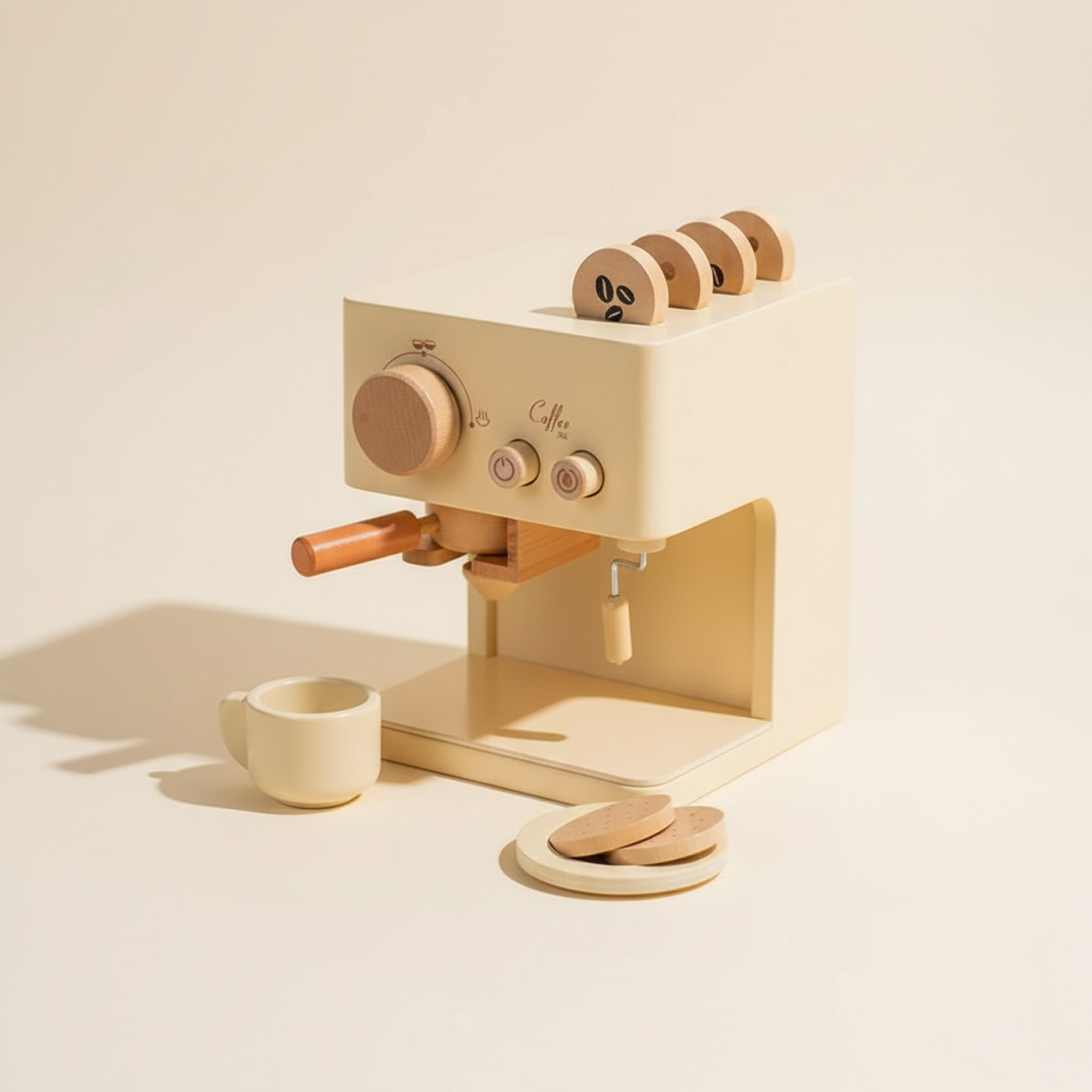
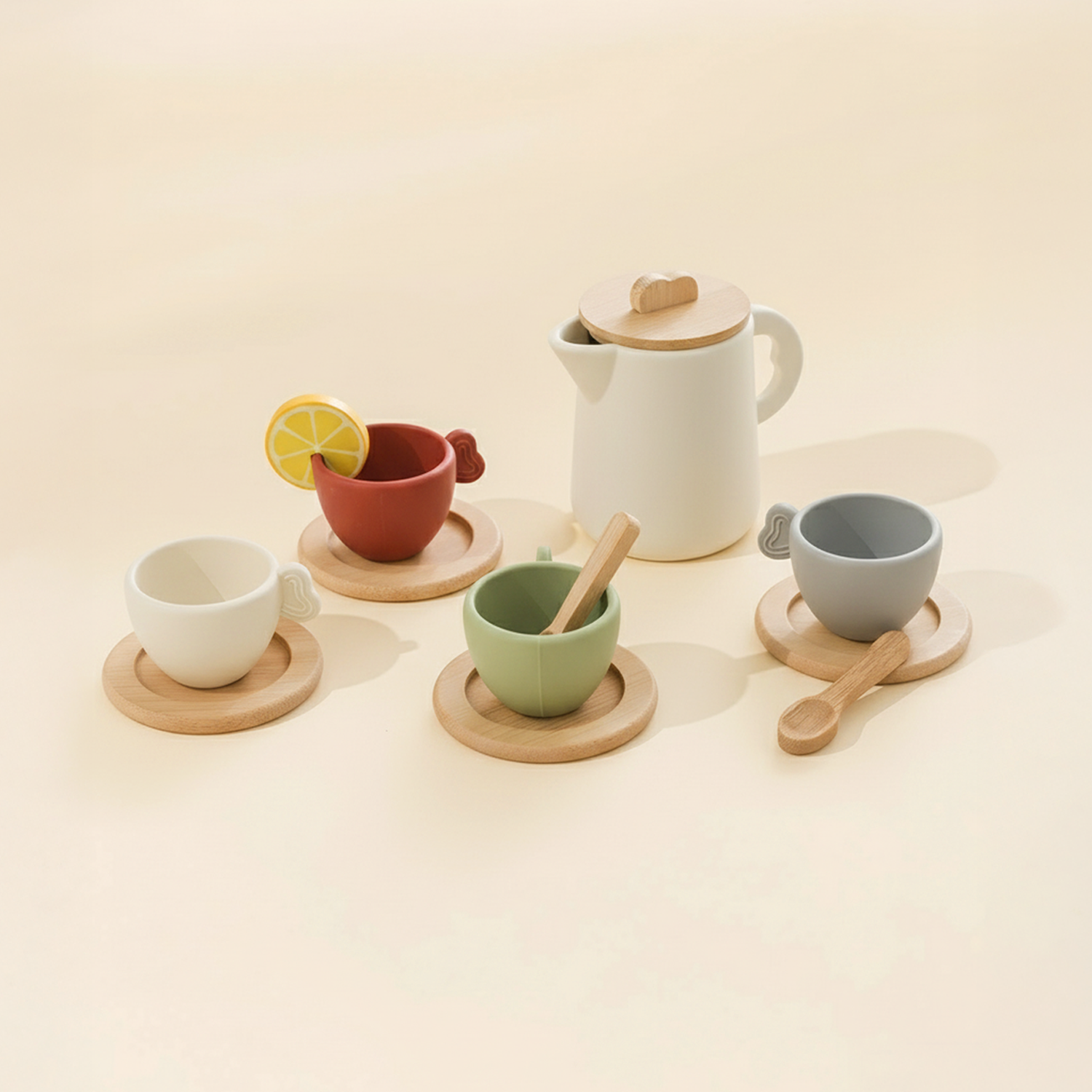
CHOOSE YOUR PLAYSET

A playset that can guide your child through Naming, Recognition, and Recall—the same proven steps used in Montessori classrooms for over a century…


So they can build the confidence, curiosity, and independence to explore—without needing constant direction or screen-based entertainment.


So, if you want the best for your child…


Then give them more than just toys.


Give them purposeful play.


Because they deserve it.


And if you want the clearest, most effective way to help your child strengthen independence through play…


The Tiny Percussionist Music Set isn’t just a good option for your child…


It’s the only solution that follows the hidden 3-step Montessori method at home to nurture self-direction.


But don’t take my word for it…


See what other parents are saying about how these playsets gave their children the confidence to play, discover, and thrive—on their own.

Katie Shear

“I wanted something that wasn’t just noisy but actually helped my son learn. The drum and shaker are perfect—he’s learning rhythm and coordination while having the best time.”

9

Emily Perry

“My daughter has always loved banging on pots and pans, so we got her this music set. She spends ages experimenting with the different sounds and even tries to copy beats we clap for her. I can actually see her focus and hand-eye coordination improving each week.”

7

Abby Clark

“My toddler absolutely lights up when we bring this out. It’s the first toy that holds his attention for more than a few minutes!”

5

Jessica Grant

“Hearing my little guy make his own rhythms is the sweetest thing. It feels like I’m encouraging his creativity while giving him something that’s both fun and educational. He calls it his ‘band time’ and it melts my heart.”

8

Deborah Cox

“My granddaughter spends 15–20 minutes playing with this by herself every day. It’s rare to find something that holds her attention without a screen, and I’m so grateful for the independence it’s helping her build.”

5

Tiny Percussionist Music Set

Start Teaching The 3-Period Lesson Today With Your Little One

CHOOSE YOUR PLAYSET

Try it today with a 30-Day Money Back Guarantee!